Peugeot GT10 · 1972

My Peugeot GT10 › 3D printing guide · PETG and TPU

3D printing guide · PETG and TPU

3D-printed parts for the Peugeot GT10

Eight parts designed for my 1972 Peugeot GT10, with their sizes, material and my print settings. The files are free on Thingiverse.

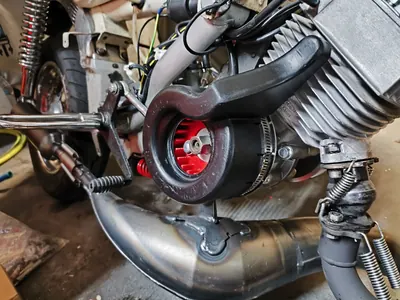
The red 3D-printed cooling fan inside its black shroud, fitted on the GT10 engine, with the duct to the cylinder

The parts to download

Free files on Thingiverse

All these parts were designed for my GT10 and printed on an Artillery Sidewinder X2. I use PETG for rigid housings and TPU, a flexible material, for anything that needs to dampen or grip. The files are shared for free on Thingiverse, for non-commercial use (Creative Commons licence).

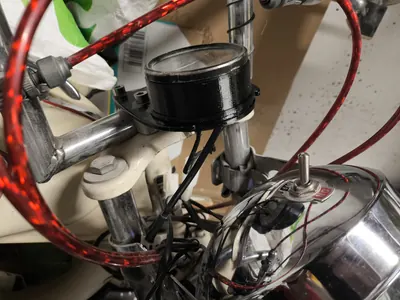
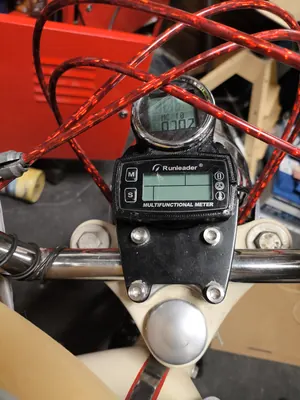
The TPU-printed mount on the GT10 handlebar, with the Runleader tachometer under the round speedometer
Thingiverse ref. 7424745 · TPU

Runleader tachometer mount

A flexible housing for the Runleader RL-HM035A-M5 tachometer, which shows the engine revs from a wire wrapped around the spark plug lead, and the cylinder head temperature. Two files: the housing on its own, to adapt to your own mount, and my version, which clips onto the round speedometer and holds a small meter.

Housing
72.5 x 40.8 x 20.4 mm, the Runleader clips in under a lip, no screws or glue
My version
clips onto a Ø 60 mm round speedometer, holds a Ø 48.3 mm meter
Cable
Ø 6.4 mm hole with a slit, to slide it in without unplugging
Files on Thingiverse
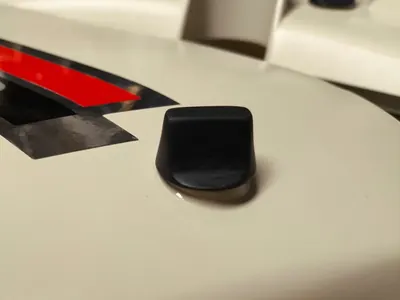
The black PETG-printed fixing knob fitted on a beige GT10 storage box cover, next to the GT 10 sticker
Thingiverse ref. 7424664 · PETG

Storage box cover knob

A reproduction of the knobs that hold the side storage box covers: the originals were as old as the moped and not always in good shape. Measured with a caliper and printed in PETG, they stand up to water and heat, and screw on in M6 thanks to a brass insert.

Dimensions
head Ø 22 mm, 19.4 mm high
Insert
M6 brass, 8 mm OD, 12 mm long, heat-set with a soldering iron
Finish
file, then 600, 1500 and 2000 grit sandpaper, no paint
Video
watch the insert being fitted on YouTube ↗
Files on Thingiverse
Video thumbnail of the GT10's wireless indicator and alarm module
Thingiverse ref. 7263014 · PETG

Under-seat indicator and alarm module

A custom housing hidden under the seat that combines wireless indicators and a vibration alarm. It runs on its own battery, without modifying the original wiring loom.

Power
3.7 V 3000 mAh battery, USB-C rechargeable
Components
adapted bicycle indicators and alarm
Video
watch the build on YouTube ↗
Files on Thingiverse
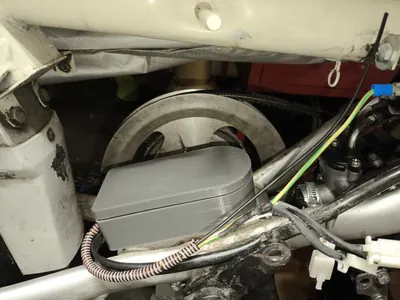
The 3D-printed electrical box, fitted near the GT10's engine
Thingiverse ref. 7199210 · PETG

Electrical box, 103 SP / GT10

A box to house the regulator or the CDI, depending on the ignition. It mounts on the swingarm or near the engine, often where the original transformer box used to be.

Size
124 x 64 mm
Printing
50% infill, no supports, no brim
Good to know
checked on a GT10; on a 103 SP, print the base first to check the clearance with the wheel
Files on Thingiverse
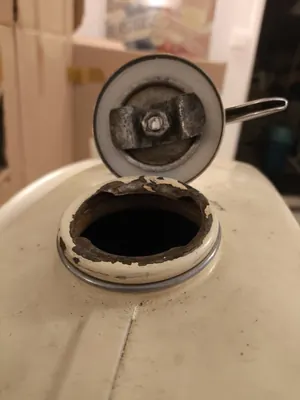
The GT10's open fuel cap, with its TPU-printed seal
Thingiverse ref. 7397413 · TPU

Fuel tank cap seal

A replacement seal for the fuel cap. TPU is a must for flexibility and fuel resistance.

Size
ID 38.5 mm · OD 60 mm · 3 mm thick
Printing
0.2 mm layers, 100% infill, random Z seam to avoid leaks
Tip
dry the filament well before printing, and lightly sand the face against the tank
Files on Thingiverse
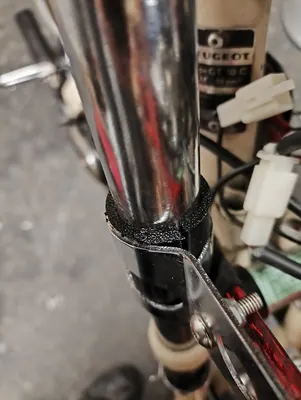
The TPU-printed headlight bracket adapter, fitted on the fork tube
Thingiverse ref. 7299499 · TPU

Headlight bracket adapter

To fit standard 30 mm headlight brackets on thinner 25 to 26 mm fork tubes, as found on many vintage mopeds.

Height
50 mm, adjustable by changing the Z scale
Printing
15 to 20% infill, no supports
Warning
TPU insulates: run an earth wire between the headlight and the forks
Files on Thingiverse
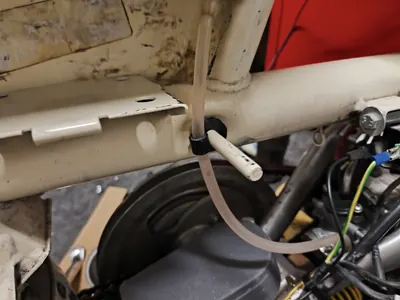
The TPU-printed fuel line guide, in place in the GT10's storage box
Thingiverse ref. 7298760 · TPU

Fuel line guide (storage box)

On the GT10, the fuel line runs through the storage box. Without a guide, it moves around or gets pinched, which cuts the fuel supply. This guide clips on where the line passes the casing.

Printing
in TPU, to withstand vibrations without damaging the line
Files on Thingiverse
The GT10's round speedometer held by its TPU-printed rubber mount
Thingiverse ref. 7177010 · TPU

Round speedometer rubber mount

A flexible mount for a 60 mm round speedometer, which holds it by friction and absorbs vibrations. Fits the GT10, the GL10 and 103s with a similar bracket.

Size
ID 59.90 mm · 28.5 mm high · 3.5 mm notch
Files on Thingiverse

Work in progress

Not published yet

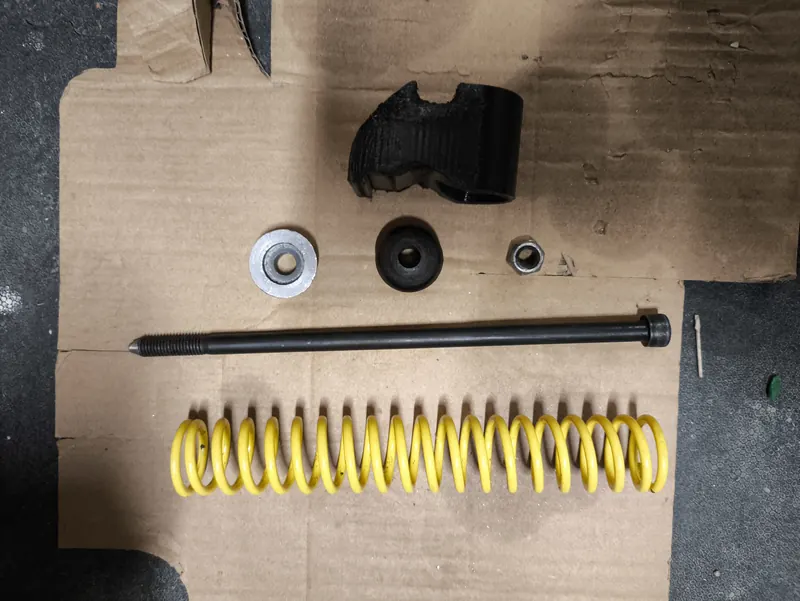
The parts of the mount laid out on cardboard: black PETG-printed part, washers, long threaded rod and yellow spring
The parts of the mount: PETG part, washers, threaded rod and yellow spring.
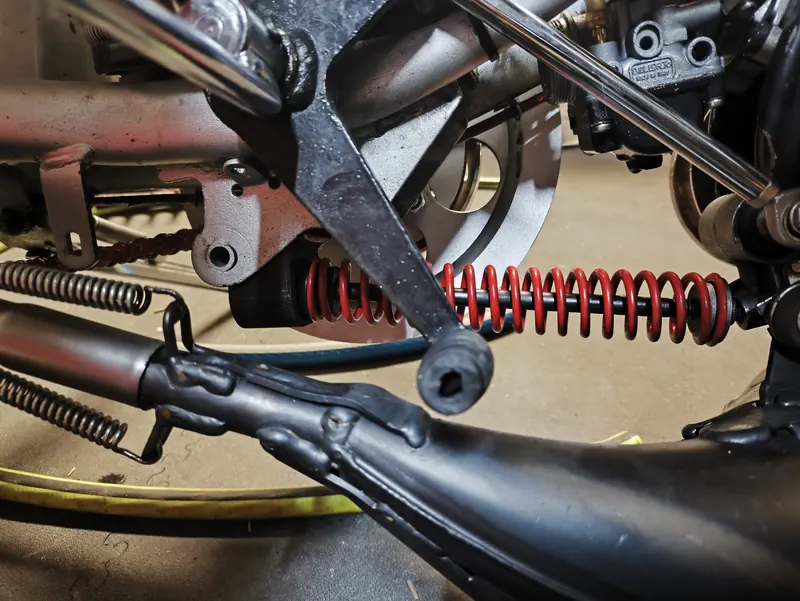
Close-up of the red Doppler spring under the engine, with the black PETG part bearing on the stand pivot
The red Doppler spring and its PETG part, bearing on the stand pivot.
Prototype · conclusive

The Doppler spring bearing on the stand pivot

The Doppler spring, red or yellow depending on the test, sits under the engine. It bears directly on the centre stand pivot thanks to a part I designed and 3D-printed in PETG. On that side: no welding and no extra bolt.

It is still a prototype, but every test so far has been conclusive.

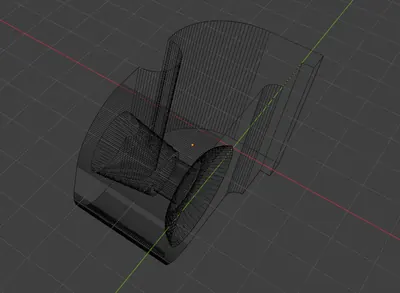
Wireframe 3D view of the Doppler spring mount, as I designed it before printing it in PETG
The mount in 3D, designed by me before printing.
  • PETG
  • Red or yellow Doppler spring
  • No welding
The red 3D-printed fan inside its black shroud, fitted on the GT10 engine, with the duct running up to the cylinder
Prototype · testing

Forced-air cooling: fan and shroud

A PETG-printed fan spins with the ignition, inside a shroud fixed to the casing with a 100 mm hose clamp: it draws air in through the opening and the duct blows it onto the cylinder fins. The duct stops 7-8 mm short of the cylinder, without touching it, so the PETG doesn't heat up against it. This cooling only matters when the moped is standing still with the engine running: on the move, the airflow is enough to cool the cylinder, and the fan just keeps it from overheating while stationary. The first attempt showed the limits of PETG: the base of the blades, too thin, deformed as it spun and rubbed against the ignition. A 0.5 mm washer now spaces the fan away, and to last it should be printed in at least PETG-CF. First tests in October 2026: watch the test video ↗. The files are already on Thingiverse ↗.

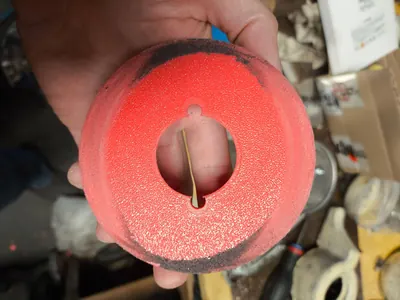
The first fan: base too thin, the PETG deformed and rubbed against the ignition (black marks)
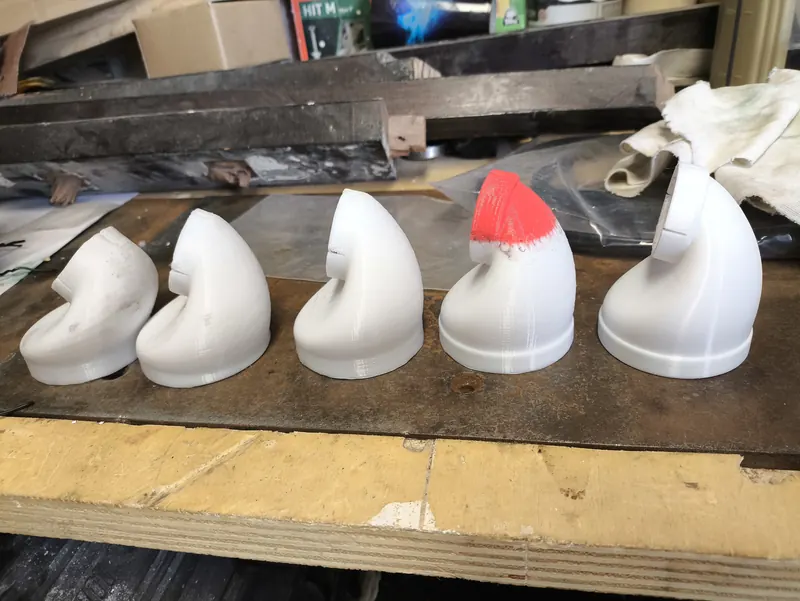
Five 3D-printed airbox prototypes on the workbench
Testing

Venturi-style airbox

A home-made airbox inspired by the venturi effect. Not conclusive so far: it seems to disturb the airflow. Next tests with a smaller jet.